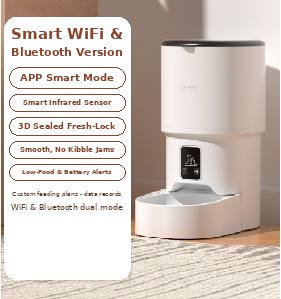
A smart pet product is a different kind of sale from a bowl or a toy that needs no power. Once a customer takes home a feeder, a self-cleaning litter box or an app-connected toy, the questions do not stop at the till. They start there. The food did not come out at the right time. The app will not connect. The litter box stopped mid-cycle. How your store handles those first questions often decides whether that customer comes back, and whether they recommend your shop to another pet owner.
This guide is for retailers stocking smart pet products for the first time. It does not replace your supplier's instructions for a specific product. It covers the habits that make after-sales support manageable: what to settle before you order, what your staff need to know, and how to deal with a return fairly and calmly.
Start before you order, not after the first complaint
Most after-sales problems are easier to prevent than to fix. Before you commit to a new smart product, ask your supplier a short list of practical questions and keep the answers in writing:
- If a unit is faulty, what is the process? Who does the customer contact first, and what does your store need to send back?
- Are spare parts or accessories available, such as filters, bowls or power adapters, and how are they ordered?
- Is there a user manual in the language your customers read? If not, what support material can you show in store?
- How long does the supplier usually take to answer a support question, and through which channel?
A short, written summary of the returns process and support channel is enough. Our earlier guide on how to evaluate a wholesale pet supplier covers the wider checks to make before a first order.
Teach your staff three things, not everything
Your team does not need to become technicians. They need to be confident on three basics for every smart product you stock:
- Power and charging. How is it powered, how is it charged, and what happens if the power goes out? For feeders, this matters most: a customer who travels will ask what happens to scheduled meals during a power cut.
- App setup. Which app is used, and what are the first steps to connect it? Staff who have walked through setup once can talk a nervous customer through it in minutes.
- Cleaning. How is the product taken apart for cleaning, and which parts should never be soaked or put in a dishwasher? Many complaints that sound like faults are really cleaning or assembly problems.
If you can, keep one demo unit in store and let staff use it themselves. A team member who has actually set up a smart feeder or run a cleaning cycle on a litter box will answer questions far better than someone who has only read the box.
Use the demo unit to set expectations
Smart products work best when the customer knows what to expect before they buy. A short, honest demonstration in store does more than a long sales pitch. Show how the product is assembled, how it is cleaned, and what it sounds like when it runs. Mention the everyday realities plainly: a feeder needs to be refilled, a litter box needs its waste drawer emptied, and an app-connected toy needs to be charged.
This is also the moment to ask about the customer's home. Do they have reliable Wi-Fi where the product will sit? Is there a power outlet nearby? A feeder placed in a spot with no signal, or a litter box squeezed into a corner where it cannot complete its cycle, will cause problems that have nothing to do with quality. A two-minute conversation at the point of sale can save a return later.
Answer common questions with a simple checklist
When a customer calls with a problem, start with the basics before assuming the unit is faulty. A calm, step-by-step check usually resolves the issue, and it shows the customer you are taking them seriously:
- Is the product charged or plugged in, and is the outlet working?
- Has it been assembled exactly as shown in the manual, with no part left loose?
- Has it been cleaned recently, and is anything blocking a sensor, outlet or moving part?
- For app products, is the phone connected to the right network, and has the app been updated?
- Has anything changed at home, such as a new router, a moved product or a different type of food or litter?
Write this checklist down and keep it by the phone. It keeps every member of staff consistent, and it gives you a clear record if the problem turns out to be a genuine fault and you need to go back to your supplier.
Handle returns fairly, and keep a record
Sooner or later, a unit will need to come back. How you handle that moment matters. Stay calm, listen first, and do not promise a replacement or a refund on a timescale you cannot control. Explain the process you agreed with your supplier, what you need from the customer, and what happens next. Ask the customer to keep the packaging and any accessories until the matter is settled, and note down the date, the product, the problem as the customer described it, and what you tried.
That simple log becomes valuable over time. It shows whether the same issue keeps appearing on one product, which helps you decide what to restock and what to raise with your supplier. Keep the log short and factual, and review it whenever you plan your next order. Our guide on how to plan your first wholesale order explains how that kind of record feeds into better ordering decisions.
Keep the range simple at first
One last habit helps more than any other: do not stock every smart product at once. Start with a small number of products your staff understand well, learn how customers use them, and build from there. A store that supports three smart products confidently will earn more trust than a store that stocks ten and cannot answer questions on any of them. As your team grows comfortable, you can add small pet habitats or new categories, one step at a time.
Good after-sales support is not about having every answer on the spot. It is about knowing the basics, having a clear process for faults, and treating the customer as if you expect to see them again. That is how a first-time retailer turns a single smart product sale into a returning customer, and a returning customer into a regular.