Automatic feeders have moved from gadget-niche to everyday essential. Busy US households and multi-pet homes increasingly rely on scheduled feeding, and the step from a gravity feeder to a programmable smart pet feeder has become an easy sell. For pet stores and distributors, wholesale smart pet feeders are attractive: higher ticket than a food bowl, genuinely useful, and a product customers research before they buy — which means they walk into stores asking for it. But feeders carry a unique trust burden: this is a device your customer depends on every day for an animal they love. A feeder that fails does not just create a return — it creates a missed meal. This guide covers the six factors US wholesale buyers should weigh before placing an order.
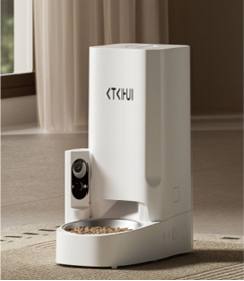
Why smart feeders earn their shelf space
Three things make this category retail-friendly. First, demand is pull-driven: customers come looking for scheduled feeding solutions, so you are stocking an answer rather than pitching a novelty. Second, the problem is urgent and emotional — nobody wants their pet to miss a meal — which shortens the decision cycle compared with impulse categories like toys. Third, feeders create attachment: once a household runs on your brand of feeder, they come back for accessories and eventually the next unit. A wholesale smart pet feeder assortment that matches your local customers' needs turns a one-time purchase into a long retail relationship.
6 things to check before ordering smart feeders wholesale
1. Portion control and food compatibility
This is the heart of the product. Ask how precisely portions can be set — the best feeders let you dial in small increments per meal rather than vague "1–3 cups" steps. Just as important, confirm which kibble sizes and shapes the dispenser handles without jamming: flat, round, and irregular kibble jam differently, and freeze-dried raw or semi-moist foods are a separate question entirely — many smart feeders are dry-kibble-only, and selling a unit that jams on your customer's food is a guaranteed return. Ask the supplier for the tested kibble diameter range and whether a freshness-sealing design is included in the food bin.
2. App-controlled vs. no-app models
App-controlled feeders are the enthusiast pick: remote feeding, feeding logs, and schedules in the phone app. No-app or button-programmed models are the practical pick: simpler for older customers, no phone required, fewer software failure points. Stock a couple of each and let the customer self-select. When you review a supplier's wholesale automatic pet feeder lineup, ask which models require an app at all — a unit that cannot dispense until the customer pairs a phone will frustrate the shoppers who want the simplest option. Also ask whether the app runs in English — a practical detail that decides real-world usability.
3. Power and backup
This is the question that separates a good wholesale partner from a box-shipper. Ask how long the battery backup holds the feeding schedule in a power outage, and whether the schedule survives a full power loss at all. A feeder that forgets its programming the moment the power blips is a return waiting to happen. Also ask about low-battery behavior: does the unit alert the owner, or does it fail silently? Get the answers in writing before your first order, because your customers will ask you at the counter.
4. Build quality and pet-proofing
Cats knock things over; dogs chew things open. Look for a stable, tip-resistant base and a lid lock a clever cat cannot defeat — lid security is the single most common complaint in this category, ahead of electronics. Food-grade materials for every food-contact part are non-negotiable, and removable, washable trays matter more than they sound: customers who cannot clean the tray easily will dislike the product within a month, and that dislike travels back to your store. Stainless steel food bowls are a plus worth asking about, since many US customers now actively avoid plastic-contact feeding.
5. Camera models: the upsell tier
Feeders with built-in cameras — the "visual" tier — cost more and earn more. They let owners check in on pets during meals, and the camera turns a practical purchase into an emotional one. For your shelf, camera models are the upsell anchor: keep one on display, let customers look through its live view, and it sells the whole category above it. Just be realistic about the limits: ask about video resolution, night visibility, and whether the camera feed requires a subscription to keep. If there is a subscription, know its cost and terms before your first order — customers will ask, and "I don't know" at a premium price point loses the sale.
6. Supplier support for the long run
A feeder is a daily-use appliance, so post-sale support matters more here than in almost any other pet category. Before a first order, ask how the supplier handles defective units — dead-on-arrival replacements, and what happens when a motor fails in month three. Ask whether spare parts (trays, lids, power adapters) are available separately, because a lost power cord should not mean a whole new feeder. Check that the SKUs you want are regular catalog lines rather than one-off lots, so reorders match what you sampled. And test responsiveness during the sales process — if answers are slow now, they will be slower when a customer is at your counter with a broken unit.
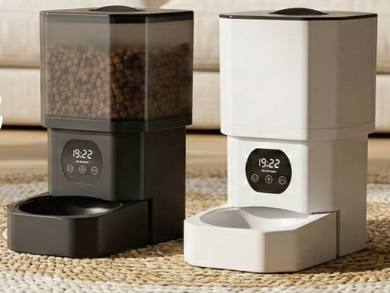
Pair feeders with water dispensers
Feeders rarely sell alone. The same household buying scheduled feeding is the household that needs continuous fresh water — and a fountain-style water dispenser next to the feeder completes the "automated feeding station" story. Merchandising the two together, online or on an endcap, turns a single feeder sale into a higher-value basket. When you browse wholesale feeders and water dispensers, plan the pair as one assortment: same customer, same pitch, shared fixture. And the interactive toys customer is the same shopper one aisle over — the full "connected pet home" pitch closes the loop.
Start focused, then scale
You do not need a dozen feeder SKUs to test the category. Most successful first orders are focused: an entry no-app model, one mid-range app-controlled feeder, and one camera model as the premium anchor — three price points that let every customer self-select without overwhelming your shelf. Watch sell-through and customer questions for six to eight weeks, note whether your neighborhood skews app-savvy or simplicity-first, then scale the winners. When you are ready, send us your shortlist — we will confirm specs, carton quantities, pricing and lead times, and help you shape the mix before you commit.