Every pet store owner knows the feeling: a new product looks great in the catalog, the supplier is enthusiastic, and the first big order feels like a smart bet — until the boxes sit on the shelf for three months. The products that fail are rarely bad products. They are products nobody tested. A test-sell is the cheapest insurance a store can buy.
A test-sell is not a sample for the back room. It is a real product on a real shelf, priced and displayed the way the full range would be, watched for a set number of weeks.
1. Why a test order beats a big first order
A large first order locks up cash and shelf space at once. If the product is a slow seller, you have money tied up in stock and a display that earns nothing. A small test order limits both. The worst outcome of a test is a few unsold units; the worst outcome of a blind volume order is a pallet of them.
A test also tells you things a catalog cannot: whether customers ask questions about the product, and whether staff can explain it in one sentence. For a first buy from a new supplier, the test is doubly useful — it shows how the supplier actually works before you commit to volume. Our first-order guide covers the full checklist for that first buy.
2. Pick three test products, not thirty
Test-selling works when the test is small enough to watch properly. Three products is a good number: one hero with a clear selling point, one everyday product at an everyday price, and one from a category you do not currently stock.
The hero is the one customers can see working. A moving ball that rolls on its own, like our ETPU Smart Pet Ball (PL001), or a water fountain with visible flowing water, like the Premium Faucet Water Dispenser (PL075), sells on demonstration. Pick a hero you can demo on the shop floor.
The everyday product is the repeat sale: a chew ball, a tug ring or a feeder accessory that a customer buys without thinking twice and comes back for. Our Titan Tug Ring (PL024) fits this slot. Everyday products rarely look exciting in a catalog, but their sell-through is steady — and steady is what pays the rent.
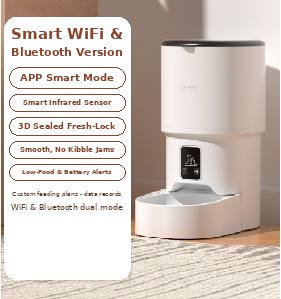
The third slot is the experiment — a category you have not stocked before, such as a smart litter box or a small pet habitat. This is where a test earns its keep: it answers "would our customers even buy this?" before you rebuild a whole section around it. If it fails, you have lost a small test order; if it works, you have found a new category first.
3. Set the test up so the result means something
A test without rules produces an opinion, not an answer. Fix four things before the products arrive. First, the time window: four weeks is a good default, covering two pay cycles and a mix of weekday and weekend shoppers.
Second, the placement. Give the test products a fair spot, not a punishment spot: a product on a bottom shelf at the back of the store has not been tested, it has been hidden. Place the hero where customers can see it work.
Third, the staff briefing. Staff should be able to explain each test product in one sentence before it goes on the shelf: the moving ball plays by itself, the tug ring is for daily play together, the water dispenser keeps water flowing and fresh. If staff cannot explain it, customers will not buy it. Have staff use the product themselves at least once, so the first customer question does not catch them out.
Fourth, the tracking. Write down four numbers every week: units sold, units left, returns or complaints, and customer questions about the product. Questions count as data: five customers asking about a feeder in week one is a signal even if only two bought one.
4. Reading the result: sell-through, questions and shelf space
At the end of the four weeks, judge each product on three things. The first is sell-through: how much of the test quantity sold. A product that sold out in two weeks is a reorder. One that sold half its stock in four weeks is a maybe.
The second is the customer questions it generated. A product that customers kept asking about but did not buy is telling you something different from a product nobody noticed at all. Questions without sales usually point to price, size or a feature staff could not explain.
The third is shelf space: every product earns its place by what it returns per foot of shelf. Compare the test products against the proven sellers already on that shelf. A test product does not need to beat your best seller to earn a reorder; it needs to earn more than whatever would take its place.
5. What to do next: reorder, adjust or drop
Three outcomes, three actions. If a product sold well with few complaints, reorder it with confidence — the decision is now based on your own sales data, not a supplier's promise. This is the moment to talk volume: ask for pricing and MOQ on the models that proved themselves.
If a product sold slowly but drew questions, adjust one thing and test once more: move it to a better spot, demo it properly, or check the price against nearby products. One adjustment, one more week.
If a product sold almost nothing and nobody asked about it, drop it and give the space back to a proven seller. Dropping a product is not a failure; it is the test working. Record the result — product, test dates, units sold — so the next buyer in your store does not re-test the same product a year later and learn the same lesson twice.
6. A test order tests your supplier too
Do not forget the second thing being tested. A supplier who confirms slowly, packs inaccurately or goes quiet when a test unit arrives damaged will not improve when the order gets bigger. Note how the supplier handled the small order — confirmation, packing, answers to questions. A good test result plus a good supplier experience is the combination worth building a volume order on.
That is the whole point of test-selling: replace guessing with a small, cheap experiment that answers the real questions — will our customers buy this, can our staff sell it, and can this supplier deliver it? Write the numbers down, and let the shelf decide.
Want to start a test in your store? Browse our wholesale toys, feeders and water dispensers, litter boxes and carriers and small pet habitats — then request a quote and tell us which models you want to trial. Pricing and MOQ are available on request.